- Technical visit
- Introduction to the Technical Visit (Cotai Ecological Zones)
- Introduction to the Technical Visit(Macao Refuse Incineration Plant)
- Online Registration
Technical Visit
| Date of Visit | 28 March 2026(Saturday) | Date of Registration | 04-27 March 2026 |
| Place of Visit | Cotai Ecological Zones or Macao Refuse Incineration Plant | Registration Method | Online registration, or onsite at Secretariat Office at 2026MIECF Please present your badge for registration (First Come First Serve, with Limited Seats) |
| Time of Visit | 10:00-11:00 | Assembly Point | MIECF Punch point, The Venetian Macao |
| Languages | Chinese and English Guide | Assembly Time | 09:50 |
| Target Participants | All professional visitors/delegates |
Itinerary
| (10:00-11:00) | Content | |
| 9:50 | Onsite Announcement to remind about assembly time and point. There will be staff holding the“Technical Visit” handheld signage at the assembly point | |
| 10:00 | Walk to shuttle bus station | |
| 10:05-10:45 | Start visiting | |
Cotai Ecological Zones
| Macao Refuse Incineration Plant
| |
| 10:45 | Re-group and return to venue | |
| 11:00 | End of Visit | |
Note:
1) Registered participants must get to the assembly point on time;
2) Please bring along the badge used for registration for identification.
Introduction to the Technical Visit
Cotai Ecological Zones
The Cotai Ecological Zones are located next to the Lotus Bridge of the Cotai area, with a total area of 55 hectares, including a 15 hectares Ecological Zone I with limited access, and a 40 hectares Ecological Zone II with free access to the public on the riverside. Located at the northeastern side of the Lotus Bridge, Ecological Zone I is constructed with two birdhides at its south bank. This zone has aquatic shrubs, reeds, trees and mud, and it is connected, through culverts, to the Shizimen’s water course. Spreading at the west side of the Cotai area, Ecological Zone II has three artificial islands, and a trail where you can find four native mangrove species: Acanthus ilicifolius, Kandelia obovata, Avicennia marina and Aegiceras corniculatum.
The Cotai Ecological Zones were established in 2004, and have been managed by professional companies since then. It is also a research location; where data on benthos, plants, birds, water quality and environment conditions are collected in a systematic manner. The Cotai Ecological Zones have 458 species of plants, 119 species of fishes, 176 species of zoobenthos and 683 species of insects. The rich bio-diversity and food availability of the Zones make it an ideal habitat and feeding sites for 198 species of resident and migratory birds, including some endangered species, such as the black-faced spoonbill (Platalea minor). During the 2025 winter migration season, a maximum of 18 black-faced spoonbills have been spotted living in the Cotai Ecological Zones.
In recent years, the Cotai Ecological Zone have received about 5,000 visitors each year. In the coming future, new enrichment and upgrade of the educational facilities will turn the Cotai Ecological Zones into the environmental and ecological education sites in Macao.
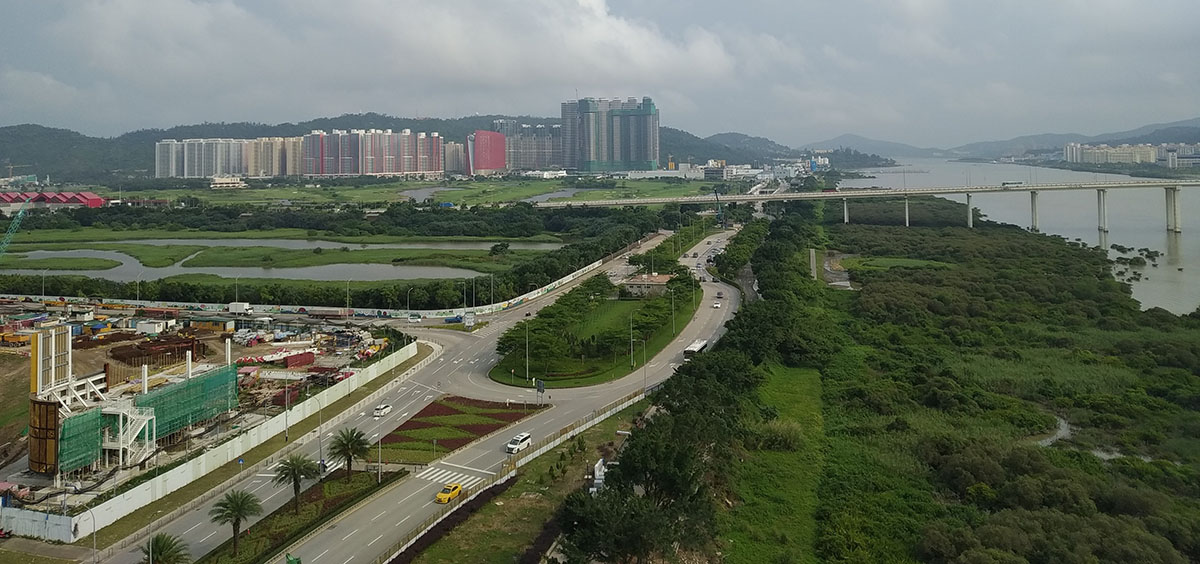
Cotai Ecological Zones
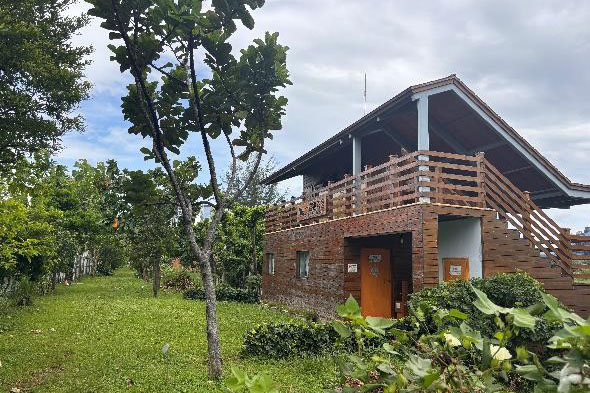
Birdhide and Natural Educational Trail
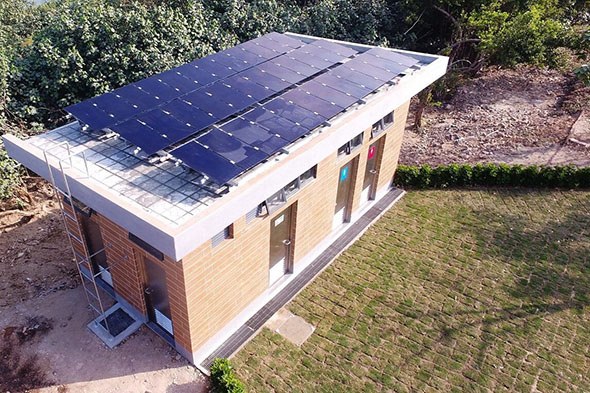
Solar-powered Toilet
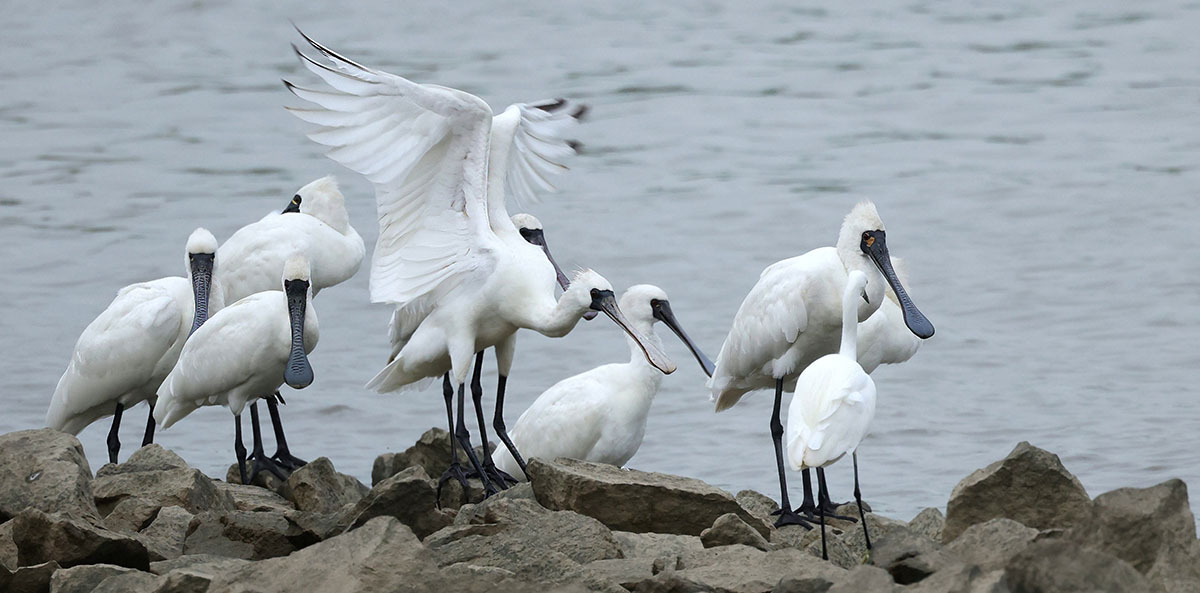
Black-faced spoonbills (Platalea minor) in the Cotai Ecological Zones
Introduction to the Technical Visit
Macao Refuse Incineration Plant
The Macao Refuse Incineration Plant is located in the Pac On Industrial Zone of Taipa, Macao, with an area of approximately 51,000 square meters. It comprises three plant buildings: Phase I and Phase II plant each have three incinerators with a capacity of 288 tonnes per day per unit, while Phase III plant has two incinerators with a capacity of 650 tonnes per day per unit. The three plants commenced operations in 1992, 2008, and 2024, respectively.
The three plants have a total of eight treatment lines, with a maximum daily capacity of approximately 3,000 tonnes. Each treatment line adopts Martin grate incineration technology and is equipped with a waste heat recovery boiler, which captures the heat generated during refuse combustion to produce steam that drives a turbine generator. When operating at full capacity, it can generate approximately 56.7 MW of electricity per hour, of which about 15 MW is used for its own operation, and the rest can be transmitted to the public power grid.
The incineration lines in both Phase II and Phase III plants are equipped with advanced flue gas treatment systems to treat pollutants such as nitrogen oxides, hydrogen chloride, hydrogen fluoride, sulfur dioxide, and particulate matter. The treated flue gas complies with the relevant standards of EU Directives 2000/76/EC or 2010/75/EU.
The main residues after refuse incineration are bottom ash and fly ash, which are only one-tenth of the original refuse volume — this is a great significance for land-scarce Macao.
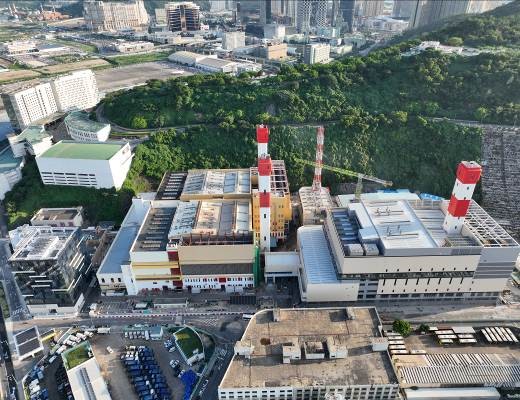
Macao Refuse Incineration Plant
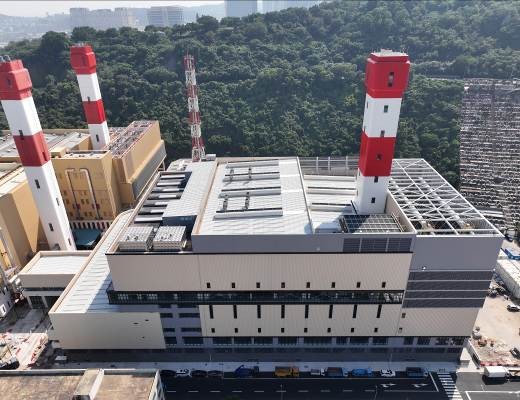
Phase III plant