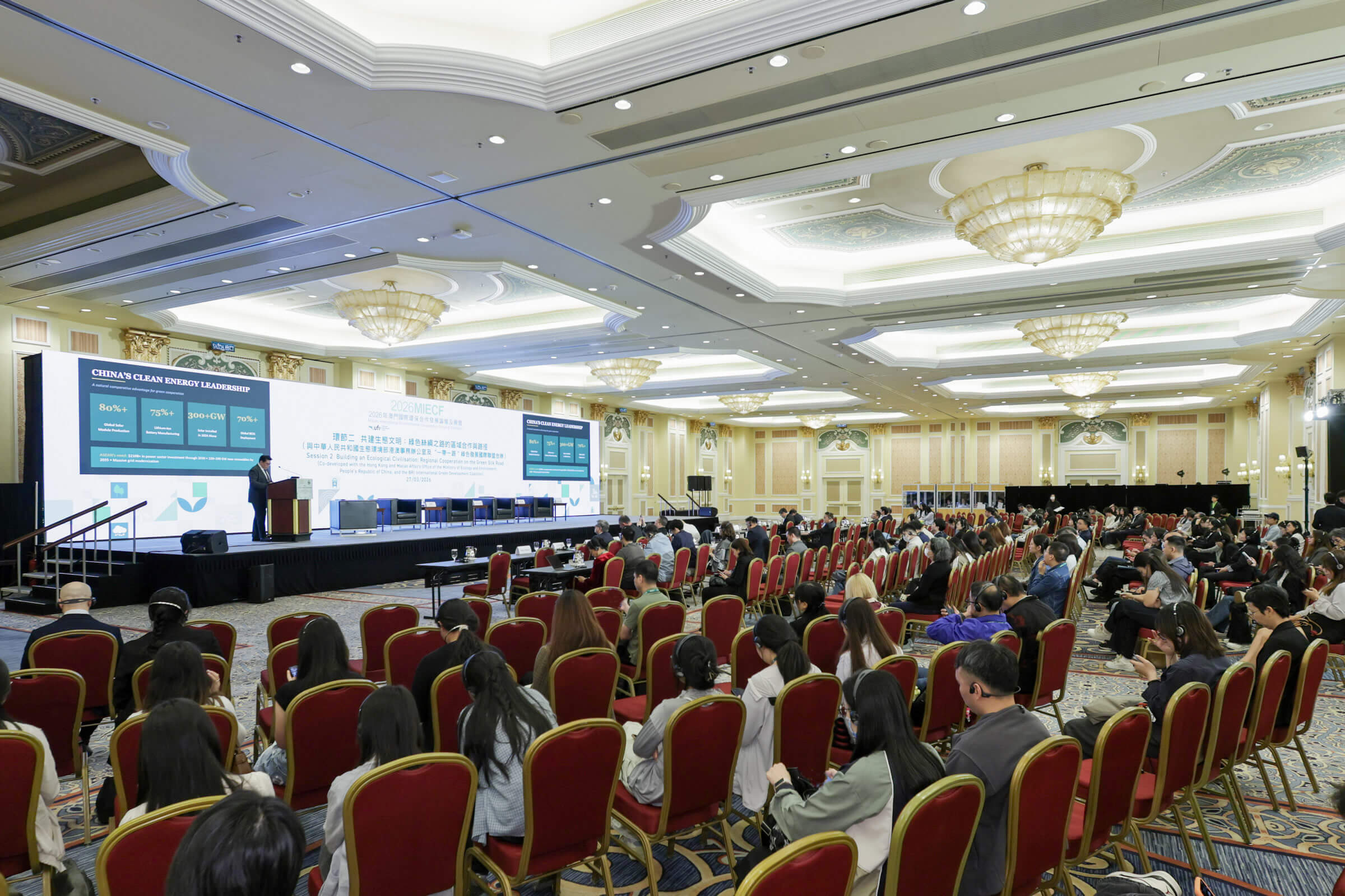
The 2026 Macao International Environmental Co-operation Forum & Exhibition (hereinafter referred to as the “2026MIECF”), hosted by the Government of the Macao Special Administrative Region, held three thematic Green Forum sessions on the second day of the event (27 March). Aligned with the theme “Low-carbon, Zero Waste Cities: Embarking on a Global Collaboration”, these sessions brought together renowned environmental experts and industry leaders from around the world to discuss cutting-edge topics such as ecological civilisation, waste management systems, and regional environmental co-operation, exploring innovative pathways toward zero-waste city development and diverse models for green collaboration and collectively driving green, low-carbon transition.
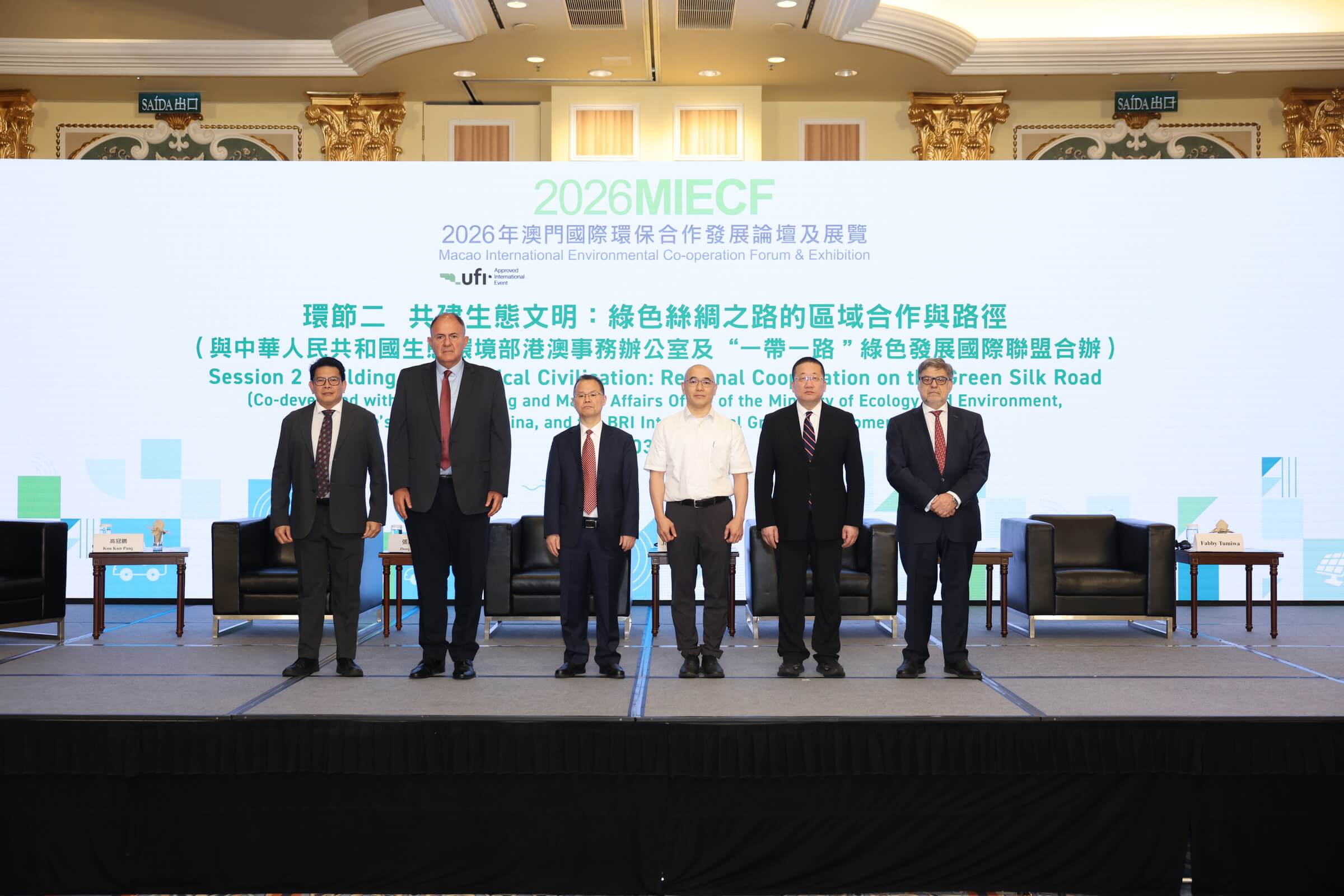
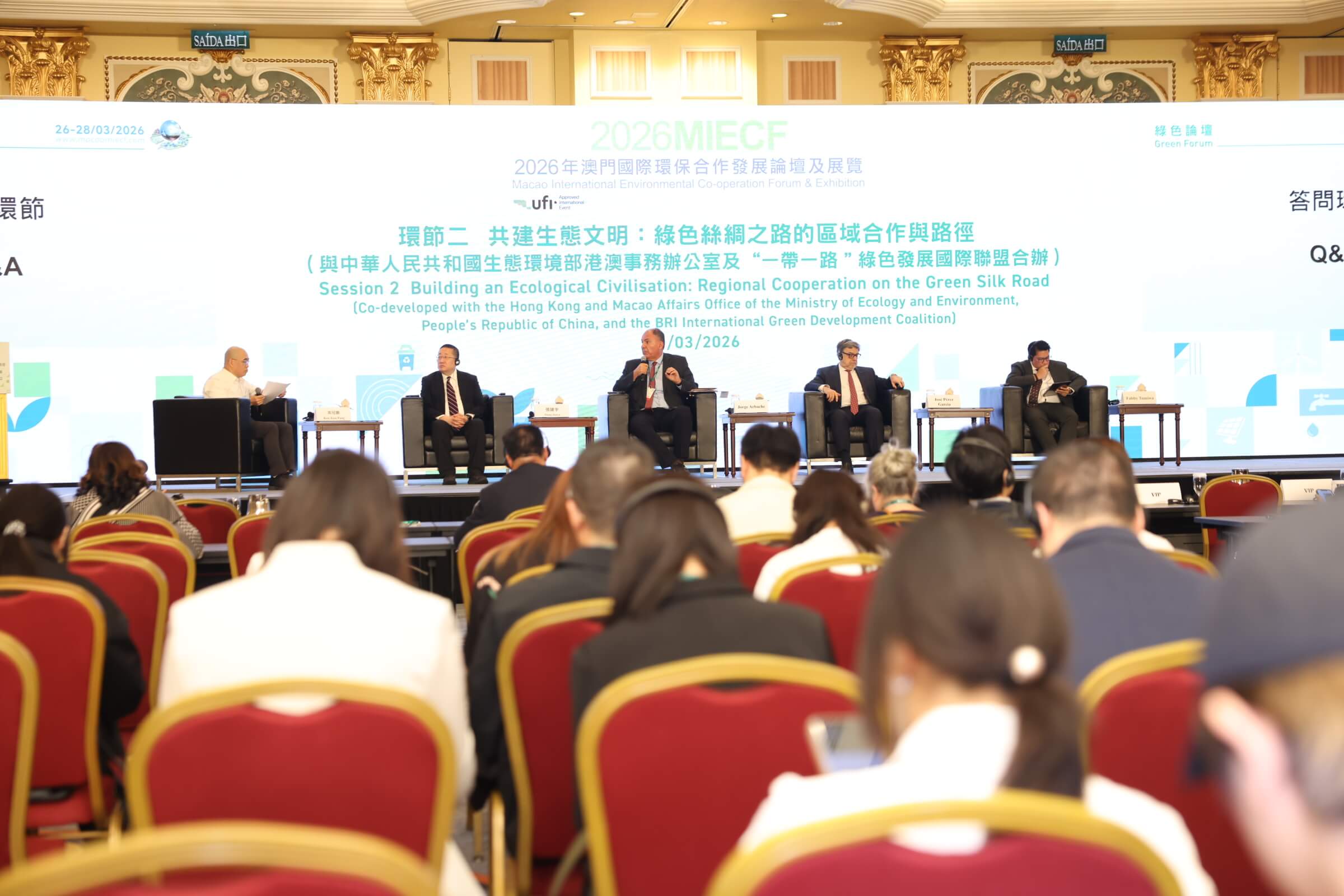
The Green Forum Session 2, co-developed by the Hong Kong and Macao Affairs Office of the Ministry of Ecology and Environment, People’s Republic of China, and the BRI International Green Development Coalition (BRIGC), took place this morning (27 March). Centred on the theme “Building an Ecological Civilisation: Regional Cooperation on the Green Silk Road”, this session featured speakers including Guo Yijun, Director General of the Department of Solid Wastes and Chemicals, Ministry of Ecology and Environment, People’s Republic of China; Zhang Jianyu, Deputy Secretary General and Chief Development Officer of BRIGC, and Executive Director of the BRI Green Development Institute; Jorge Arbache, Professor of Economics, University of Brasília, and Senior Fellow of the Climate and Society Institute;José Pérez García, Honorary President of ECOECHE, President of Ecopilas; and Fabby Tumiwa, Chief Executive Officer of the Institute for Essential Services Reform. The session was moderated by Kou Kun Pang, Associate Professor of the Department of Civil and Environmental Engineering, University of Macau.
In his keynote speech titled “Progress and Achievements of China’s Zero Waste City Construction”, Guo Yijun highlighted China’s improved capacity for integrated urban solid waste management, its tried-and-true models, and its growing international influence in this field. He recommended increasing efforts to further boost synergies between solid waste management and carbon reduction, and proposed contributing China’s strength to the development of zero-waste cities globally.
Following Guo, Zhang Jianyu delivered his keynote speech, “In the New Historical Era Post-COP30: Seizing New Trends, New Landscapes, and New Opportunities in Global Green Investment”. In it, he outlined the strategic evolution and current landscape of the Green Belt and Road Initiative in this new era. He also provided a professional, forward-looking perspective on green investment.
Other speakers addressed topics including “Green Silk Road in Action: Brazil-China Powershoring for Decarbonisation, Industrial Upgrading and Sustainable Growth”, “The Management of Electrical, Electronic and Battery Waste in Spain and Europe as a Model of Success: Cooperation with Chinese Companies”, and “Toward a Shared Prosperity: Southeast Asia - China Green Development Cooperation”. They shared their insights and experiences on reducing carbon emissions and curbing pollution, to facilitate diverse green exchanges and collaboration.
This year’s MIECF continues to seek professional accreditation for designated forums and to issue certificates of attendance to participants in designated sessions, giving full play to its role as a professional knowledge-sharing platform.